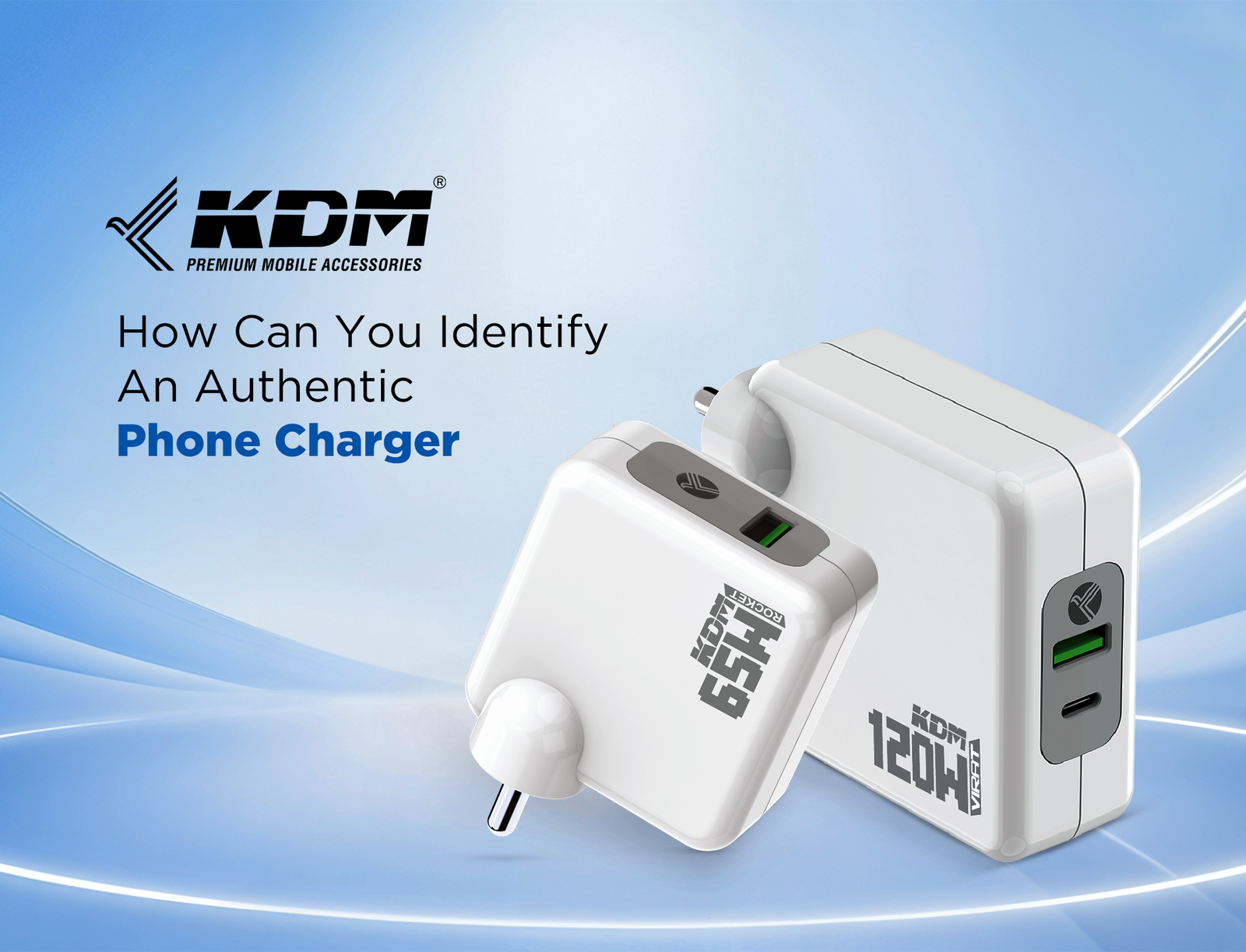
Have you ever purchased a charger that stopped working after a few weeks or caused your phone to charge unusually slowly? With countless charging products available online and offline, identifying a genuine charger has become increasingly important. A charger may seem like a simple accessory, but its quality directly impacts device performance, charging speed, battery health, and overall safety.
Understanding how to identify an authentic charger can help users protect their smartphones while ensuring safe and efficient charging. KDM India helps consumers make more informed choices by offering reliable charging accessories designed for everyday use. This guide explores the most important signs of a genuine Android phone charger and the risks associated with counterfeit products.
Why Charger Authenticity Matters
Many people focus on smartphone specifications but overlook the importance of charging accessories.
Using a low-quality charger can result in:
- Slow charging speeds
- Battery degradation
- Device overheating
- Reduced battery lifespan
- Potential safety hazards
A genuine mobile phone charger is designed to deliver stable power output while protecting both the device and the battery.
The Growing Problem Of Counterfeit Chargers
Counterfeit electronic accessories have become increasingly sophisticated.
Many fake products closely resemble genuine ones in terms of packaging and appearance. However, the internal components often differ significantly.
Low-quality chargers may lack the following:
- Proper insulation
- Safety certifications
- Voltage regulation systems
- Heat management mechanisms
- Quality-tested components
This is why identifying an authentic mobile phone charger is more important than ever.
Check For Official Safety Certifications
One of the easiest ways to identify an authentic charger is by reviewing its certification markings.
Depending on the region, genuine chargers may include certifications such as:
- BIS Certification
- CE Marking
- FCC Compliance
- RoHS Certification
These certifications indicate that the charger has undergone testing for safety and performance standards.
If certification information is missing or appears suspicious, the charger may not be genuine.
Examine The Build Quality
Authentic chargers typically demonstrate higher manufacturing standards.
Look closely at:
- Material quality
- Connector finish
- Plastic molding
- Cable durability
- Printing accuracy
A genuine android phone charger usually feels sturdy and well-constructed, while counterfeit versions often use cheaper materials and inconsistent finishing.
Verify Charging Specifications
Manufacturers clearly indicate charging specifications on their products.
Check for details such as:
- Output voltage
- Current rating
- Power wattage
- Fast charging support
If specifications appear unclear, missing, or unrealistic, the charger may not be authentic.
Many modern smartphones require a compatible Android phone charger to achieve advertised charging speeds.
Compare Packaging Details
Packaging can provide valuable clues regarding authenticity.
Pay attention to:
- Spelling errors
- Printing quality
- Brand logos
- Product information
- Barcode accuracy
Authentic products generally maintain consistent branding and professional packaging standards.
Common Warning Signs Of Fake Chargers
Consumers should be cautious when encountering chargers that exhibit the following characteristics:
- Extremely low prices
- Missing certifications
- Poor build quality
- Loose connectors
- Unusual heating
- Inconsistent charging speeds
These warning signs often indicate counterfeit or low-quality products.
Why Fast Charging Compatibility Matters
Modern smartphones increasingly rely on advanced charging technologies.
A quality android phone charger supports:
- Stable voltage delivery
- Temperature management
- Fast charging protocols
- Battery protection systems
Using incompatible accessories may prevent devices from charging efficiently or safely.
Buy From Trusted Sources
One of the simplest ways to avoid counterfeit products is purchasing from authorized retailers and reputable brands.
Reliable sellers typically provide:
- Product warranties
- Customer support
- Verified specifications
- Authentic packaging
Investing in a genuine mobile phone charger often saves money in the long run by protecting your device and battery health.
Check The Cable Quality And Connector Finish
The charging cable often reveals whether a product is genuine or counterfeit.
When inspecting a charger, pay attention to the following:
- Connector alignment
- Cable thickness
- Flexibility
- Port fit
- Material quality
A genuine Android phone charger typically includes durable connectors with smooth finishing and consistent construction. Counterfeit products often have rough edges, loose ports, or uneven molding.
Verify The Brand And Manufacturer Information
Authentic products clearly display manufacturer details.
Look for:
- Model numbers
- Product specifications
- Customer support information
- Manufacturing details
- Warranty information
Legitimate companies provide traceable information that allows consumers to verify product authenticity.
If important details are missing, incomplete, or difficult to verify, the charger may not be genuine.
Be Cautious Of Extremely Low Prices
One of the most common warning signs of counterfeit products is unrealistic pricing.
A genuine phone charger contains quality-tested components, safety systems, and certified electronics. These features come at a manufacturing cost.
If a charger is being sold at a price significantly lower than comparable products from reputable brands, consumers should proceed carefully. Recent reports continue to highlight safety concerns involving counterfeit chargers sold through online marketplaces.
Test Charging Performance
Performance can provide valuable clues about authenticity.
Signs of a quality charger include:
- Stable charging speed
- Consistent power delivery
- Normal operating temperatures
- Reliable fast-charging support
An authentic phone charger should charge compatible devices according to manufacturer specifications without unusual interruptions.
Warning signs include:
- Excessive heating
- Slow charging
- Frequent connection drops
- Strange noises
- Burning smells
These symptoms may indicate poor-quality internal components.
Look For Proper Safety Features
Modern chargers contain multiple protection systems.
A quality charger should include:
- Over-voltage protection
- Over-current protection
- Temperature control
- Short-circuit protection
- Surge protection
Independent testing has shown that many counterfeit chargers fail basic safety requirements and may pose fire or electric shock risks. Electrical safety experts found that a large percentage of fake chargers could potentially cause serious hazards.
Authentic Vs Counterfeit Charger Checklist
|
Feature |
Authentic Charger |
Counterfeit Charger |
|---|---|---|
|
Safety Certifications |
Verified and traceable |
Missing or questionable |
|
Build Quality |
Durable and consistent |
Poor finishing |
|
Charging Speed |
Stable and reliable |
Inconsistent |
|
Heat Management |
Controlled temperature |
Excessive heating |
|
Manufacturer Details |
Clearly displayed |
Often incomplete |
|
Warranty Support |
Available |
Rarely offered |
Why Buying From Trusted Brands Matters
Consumers often focus on device specifications while overlooking the importance of charging accessories.
Established brands invest significantly in product testing, safety compliance, and quality assurance before bringing chargers to market. KDM India, for example, offers a wide range of charging solutions designed to support modern smartphones while emphasizing reliability, compatibility, and user safety. The company has built a strong presence in India’s mobile accessories market through its focus on innovation and quality-driven manufacturing practices.
Working with them ensures:
- Better product reliability
- Safer charging performance
- Longer product lifespan
- Verified quality standards
A trusted mobile phone charger manufacturer typically follows industry standards, performs safety testing, and provides after-sales support that counterfeit sellers rarely offer.
Summary
Identifying an authentic charger is about much more than avoiding a poor purchase. A genuine mobile phone charger helps protect your smartphone, supports battery health, and reduces safety risks associated with low-quality electronics.
By checking certifications, inspecting build quality, verifying specifications, reviewing manufacturer information, and purchasing from trusted sources, consumers can significantly reduce the risk of buying counterfeit products.
As smartphone technology continues to advance, choosing a reliable Android phone charger will remain essential for maintaining device performance, charging efficiency, and long-term reliability.
KDM India, as a recognized mobile charger manufacturer, companies that prioritize quality control help users protect their devices while improving charging efficiency.
FAQs :
- How can I tell if a phone charger is genuine?
- Are counterfeit chargers dangerous?
- Why does an authentic charger cost more?
- Can a fake charger damage my phone battery?
- What should I do if my charger becomes unusually hot?
Check for safety certifications, manufacturer details, quality packaging, durable construction, and consistent charging performance.
Yes. Counterfeit chargers may cause overheating, electrical shock, fire hazards, and battery damage due to poor-quality internal components.
Authentic chargers use certified components, undergo safety testing, and include protection mechanisms that improve reliability and safety.
Yes. Unstable voltage delivery and poor-quality electronics can negatively affect battery health and device performance.
Stop using it immediately and inspect it for signs of damage. Excessive heat may indicate a faulty or counterfeit charger.